

Turn Your CS2 Demos Into Training Tools Using Free Editing Software
 If you’re serious about improving in CS2 and climbing platforms like FACEIT, watching your demos is one of the fastest ways to get better and steadily increase elo. The problem is that most players just watch their demos passively and move on. They might notice a missed shot or a bad round, but they rarely turn those observations into actual improvement.
The difference between players who stay stuck and those who climb is simple. Better players treat demos as training, not just replays. With the help of free software, you can turn your gameplay into something structured, repeatable, and useful.
Why Watching Demos Alone Doesn’t Work
Watching a full match without a system often leads nowhere. It feels productive, but the learning doesn’t stick. You might recognize a mistake in the moment, but by your next game, you’ve already forgotten it.
Editing forces you to slow things down and focus. Instead of scanning through rounds, you isolate key situations and revisit them with intention. That shift alone turns demo review into a real skill-building habit.
Common issues when players only watch demos:
- They don’t take notes or track patterns.
- They focus only on aiming mistakes.
- They don’t revisit the same scenarios again.
Editing solves all of these by making your review more deliberate.
Step 1: Get Your Demo and Identify Key Moments
Start by downloading your demo from your CS2 match history or FACEIT. Open it in-game and begin reviewing, but don’t try to analyze everything. Focus only on serious situations.
Look for moments where decisions mattered:
- Your deaths, especially repeated ones
- Clutch attempts
- Entry fights
- Rotations and positioning
These are the clips that will give you the most value. Instead of reviewing an entire 30-minute match, you’ll be working with short, focused segments.
Step 2: Record and Extract Clips
Once you’ve identified key moments, record them using a free tool like OBS Studio. Keep each clip short, usually between 5 and 20 seconds. The goal is to isolate the exact moment where something went right or wrong.
While recording, start asking simple but important questions. Why did you lose that duel? Were you in the correct position? Did you have information before making that move?
By focusing on specific clips, you avoid wasting time and make your review more actionable.
Step 3: Choose the Right Free Editing Software
You don’t need paid tools to do this effectively. Several free options can handle everything you need.
- DaVinci Resolve for more advanced editing and control
- CapCut desktop if you want something simple and quick
- Shotcut if you prefer a lightweight option
The tool itself is not the focus. What matters is how you use it to break down your gameplay.
Step 4: Turn Clips Into Training Scenarios
This is where real improvement begins. Instead of just watching clips, you transform them into lessons you can revisit.
Start by slowing down your footage. Reducing the speed helps you catch small details, such as crosshair placement, movement timing, and enemy reactions. Many mistakes happen in a fraction of a second, and slowing things down makes them obvious.
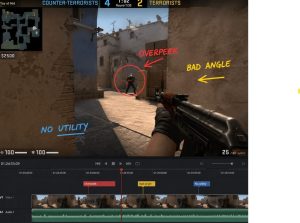
Next, add simple annotations. You don’t need anything fancy. A few words on screen can reinforce what you’re seeing and help you remember it later.
Examples of useful notes:
- Bad angle
- No utility used
- Overpeek
- Good positioning
You can also pause your clip right before a key moment. This is especially helpful before duels or decisions. Ask yourself what the best play would be, then continue the clip and compare it with what you actually did. Over time, this builds your decision-making and awareness.
Another effective method is grouping similar mistakes. Instead of focusing on a single bad play, combine several clips that illustrate the same issue. This helps you recognize patterns instead of isolated errors.
Step 5: Build a Personal Training Library
As you collect clips, organize them into categories. This turns your demo review into a long-term resource you can revisit anytime.
You can group clips based on:
- Aim and mechanics
- Positioning errors
- Decision-making mistakes
- Good plays are worth repeating.
Having everything organized makes your practice more focused. Instead of guessing what to improve, you already have clear examples of your weaknesses and strengths.
Step 6: Apply What You Learn In-Game
Reviewing and editing only matter if you apply them. After each session, choose one or two things to focus on in your next matches. Trying to fix everything at once usually leads to frustration.
For example, you might decide to improve your crosshair placement or avoid overpeeking without information. Keeping your focus narrow helps you build consistency faster.
Improvement in CS2 is not about playing more games. It is about playing with intention and correcting mistakes as they happen.
Common Mistakes to Avoid
Even with editing, some habits can slow your progress. Many players only review losses, but wins can contain just as many mistakes. Others focus only on the aim, even though positioning and decision-making have a bigger impact on rank.
Another common issue is not revisiting clips. Watching something once is rarely enough. Repetition is what builds awareness and muscle memory.
Also, don’t overcomplicate your edits. You don’t need transitions or effects. Clear and simple clips are more effective for learning.
Why This Works for FACEIT and Elo Climbing
FACEIT games are more competitive, and small mistakes are punished quickly. By reviewing and editing your demos, you start fixing habits that show up in every match.
You become more consistent, more aware of your positioning, and faster in your decisions. These are the qualities that help players climb, not just raw aim.
This process is similar to what professional players and coaches do, but you’re building it yourself using free tools.
Final Thoughts
If you feel stuck in your current rank, the issue is often not your mechanics but your habits. Demo editing helps you uncover those habits and fix them in a structured way.
Instead of grinding matches without direction, you turn your own gameplay into a training system. Over time, this leads to better decisions, fewer repeated mistakes, and steady improvement.
In the end, the players who climb are not just the ones who play more. They are the ones who understand their game and learn from it consistently.